

Blake Stitch vs Goodyear Welt vs Blake Rapid: Which Shoe Construction Is Right for You?
When building a high-end luxury wardrobe, it is easy to become captivated by the surface details of a shoe. We admire the sweeping silhouette of a wholecut oxford, the rich, multi-tonal depth of a hand-applied Italian patina, or the supple texture of top-tier French calfskin. These elements define a shoe’s visual identity.
However, the true value, longevity, and daily performance of a luxury shoe are determined entirely by what you cannot see from a retail shelf: its internal structural architecture.
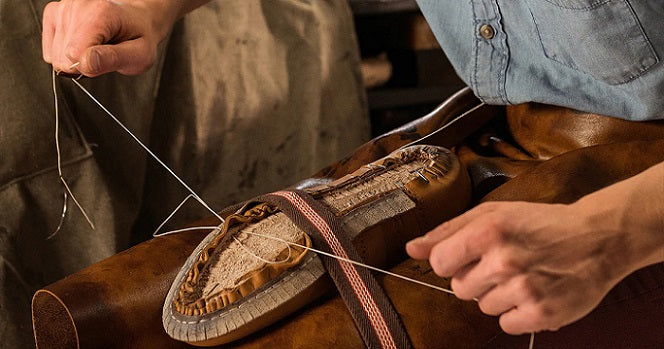
The method used to attach the shoe’s upper leather, the internal insole, and the bottom outsole together is known as the shoe construction. In the world of premium bench-made footwear, three historic methods reign supreme: the Blake-Stitch, the Blake-Rapid, and the Goodyear Welt.
If you ask ten different footwear enthusiasts which method is superior, you will receive ten conflicting opinions. One will claim that the Goodyear welt is the undisputed king of durability, while another will argue that a Blake construction offers an unmatched, elegant flexibility.
The truth is, no single construction method is universally "the best." Each method represents a distinct philosophy of engineering, balancing different trade-offs between flexibility, water resistance, weight, sleekness, and resoling capability.
At Bondeno, we do not believe in forcing our clients into a one-size-fits-all manufacturing method. Because we build every pair of custom shoes from scratch over your personalized wooden lasts in Italy, we offer all three construction methods.
This definitive guide breaks down the mechanics, advantages, and ideal use cases for the Blake-Stitch, Blake-Rapid, and Goodyear Welt, empowering you to select the perfect foundation for your lifestyle, climate, and comfort preferences.
1. The Anatomy of a Shoe: The Common Foundation
Before comparing the three construction methods, we must understand the core components that exist inside almost every high-quality bench-made shoe:
-
The Upper: The visible exterior leather (such as full-grain calfskin) that wraps around your foot.
-
The Insole: The heavy leather layer inside the shoe that your foot rests upon.
-
The Outsole: The bottom layer of leather or rubber that makes direct contact with the ground.
-
The Welt: A narrow strip of leather or plastic that acts as a structural bridge in certain construction methods.
In cheap mass-market footwear, these components are simply glued together using synthetic chemical adhesives (cemented construction). Cemented shoes are stiff, trap heat, and are completely disposable—once the glue degrades or the sole wears down, the shoe must be thrown away.
Premium bench-made shoemaking replaces glue with high-tensile, waxed linen threads and interlocking stitching channels, ensuring the shoe can be disassembled, repaired, and resoleable for decades.
2. The Blake-Stitch Construction: Sleek, Italian Flexibility
Invented by Lyman Reed Blake in 1856, the Blake-Stitch is the definitive signature of traditional Italian shoemaking. It is an elegant, direct, and highly efficient method of attachment.
The Mechanics
In a Blake-stitched shoe, the leather upper is pulled tight over the wooden last and folded completely underneath the heavy leather insole. The outsole is then pressed directly against the folded upper and insole.
Using a specialized, long-arm stitching machine, a single, continuous thread is driven straight through the inside of the shoe, piercing the insole, the folded upper leather, and the outsole simultaneously. If you look inside a Blake-stitched shoe and lift the heel sock liner, you can see the stitched threads running along the perimeter of the interior bed.
The Advantages
-
Unmatched Flexibility Out of the Box: Because there are no intermediate layers of canvas or heavy welting, a Blake-stitched shoe requires virtually zero "breaking-in" period. The sole bends effortlessly with the natural articulation of your foot from day one.
-
The Sleekest Visual Profile: Because the stitching is entirely internal, the outsole can be cut incredibly close to the upper leather of the shoe. This allows for a razor-thin sole profile and a highly contoured, sculpted waist, creating an incredibly elegant, minimalist aesthetic that is highly coveted in formal Italian oxfords and loafers.
-
Lightweight Performance: Lacking heavy internal filler materials, Blake shoes are remarkably lightweight and highly breathable, making them exceptional for warm climates, summer travel, and indoor boardroom settings.
The Trade-offs
-
Water Vulnerability: Because the stitch punctures directly from the bottom of the outsole into the interior bed of the shoe, water can find a direct pathway inside if you walk through heavy puddles or torrential downpours.
-
Resoling Limits: While a Blake shoe can absolutely be resoled by a competent cobbler, the process requires a specialized Blake stitching machine. Each time the sole is replaced, the machine drives needles through the existing holes in the internal leather insole; after 3 to 4 resolings, the internal insole can become compromised.
3. The Goodyear Welted Construction: The British Fortress
Patented by Charles Goodyear Jr. in 1869, the Goodyear Welt is the cornerstone of traditional English shoemaking. It is a highly complex, multi-layered, and extraordinarily robust method of engineering.
The Mechanics
A Goodyear welted shoe does not feature any stitches that pass directly from the outside of the sole into the inside of the shoe. Instead, the process utilizes an intermediate structural bridge: the welt (a narrow strip of premium leather).
First, a canvas ridge or leather lip is created on the underside of the internal insole. The upper leather is pulled tight over the last, and both the upper and the leather welt strip are stitched horizontally to that internal ridge. This is known as the welt stitch.
Next, a separate, vertical stitch is driven around the exterior perimeter of the shoe, connecting the leather welt strip directly to the bottom outsole. This is known as the sole stitch.
The Advantages
-
Extreme Water Resistance: Because the horizontal welt stitch is completely sealed inside the shoe and the exterior sole stitch stays entirely outside the upper leather boundaries, water cannot easily penetrate the internal footbed. It creates a highly resilient fortress against rain, slush, and damp pavement.
-
Infinite Resoling Capability: The Goodyear welt is widely considered the gold standard for repairability. When the bottom outsole wears thin, a cobbler does not have to touch the internal structure of the shoe. They simply cut the exterior sole stitch, pull the old outsole away from the leather welt, and stitch a brand-new outsole onto the existing welt. The internal insole is never altered, allowing the shoe to be resoled indefinitely.
-
The Self-Sculpting Cork Bed: Because the horizontal welt stitch creates a hollow void between the internal insole and the bottom outsole, our artisans fill this cavity with an all-natural, hot cork paste. Over the first few months of wear, your foot presses down on the insole, forcing the underlying cork to shift and mold into a perfect, physical matrix of your footprint, providing exceptional localized support.
The Trade-offs
-
A Demanding Break-In Period: Due to the multiple layers of heavy leather, canvas ridges, and welt strips, a Goodyear welted shoe is inherently stiff out of the box. It requires several weeks of dedicated wear for the components to soften and flex naturally.
-
A Bulkier Silhouette: Because the leather welt strip must extend outward past the upper leather to allow room for the vertical sole stitch, Goodyear welted shoes feature a wider, more prominent sole edge. While beautiful for robust wingtips, brogues, and winter boots, it cannot match the razor-thin visual sleekness of a Blake-Stitch.
4. The Blake-Rapid Construction: The Ultimate Hybrid
For clients who desire the structural durability and water resistance of a Goodyear welt, but prefer the closer-cut elegance and internal consistency of Italian design, Bondeno offers the Blake-Rapid construction. This method is a highly sophisticated hybrid that bridges the gap between English utility and Italian art.
The Mechanics
As the name suggests, this method utilizes a two-step stitching process that combines the internal mechanics of a Blake-stitch with an external rapid outsole stitch.
-
The Blake Step: The upper leather is lasted over the internal insole. An intermediate leather layer—known as the midsole—is placed against the bottom. A traditional Blake stitch is driven straight through the insole, the upper leather, and this midsole layer, binding them into a single, cohesive unit.
-
The Rapid Step: A brand-new leather or rubber outsole is placed underneath the midsole. A completely separate, heavy-duty stitching machine drives a vertical stitch around the outside perimeter, connecting the midsole directly to the bottom outsole. This exterior stitch is known as the Rapid stitch.
The Advantages
-
The Best of Both Worlds: Because the final outsole is connected via the external Rapid stitch to the midsole, it can be easily sliced off and replaced by any standard cobbler without disturbing the internal Blake stitch or the internal insole. It mirrors the infinite repairability of a Goodyear welt.
-
Enhanced Weather Protection: The solid intermediate midsole acts as a continuous structural barrier. Water trying to seep through the bottom outsole is blocked by the midsole layer, preventing dampness from ever reaching the internal Blake stitch or your foot.
-
Substantial, Executive Profile: The Blake-Rapid method naturally creates an 8mm thick double-sole stack. This offers an imposing, authoritative profile that looks magnificent on executive dress boots, longwing bluchers, and substantial dress shoes designed for cold-weather conditions.
The Trade-offs
-
Weight and Stiffness: With two full layers of heavy sole leather (the midsole plus the outsole), a Blake-Rapid shoe is heavier and stiffer than a single Blake-stitched shoe, requiring a brief breaking-in phase to unlock its full flexibility.
5. Structural Comparison Matrix
To help you visualize how these three master construction methods compare across key performance categories, review the comprehensive analytical matrix below:
| Performance Metric | Blake-Stitch | Blake-Rapid | Goodyear Welt |
| Out-of-the-Box Flexibility | Exceptional (No break-in) | Moderate (Brief break-in) | Stiff (Requires dedication) |
| Visual Silhouette | Ultra-Sleek, close-cut edge | Classic, substantial edge | Robust, extended edge |
| Water Resistance | Low (Indoor/Dry weather bias) | High (Multi-layered barrier) | Exceptional (Weatherproof) |
| Resoling Potential | 3 to 4 times maximum | Infinite | Infinite |
| Internal Bed Comfort | Minimalist & Lightweight | Cushioned Leather Stack | Self-Sculpting Hot Cork |
| Best Stylistic Match | Loafers, Wholecuts, Slim Suits | Dress Boots, Derbies, Flannels | Heavy Brogues, Wingtips, Tweed |
6. Engineering for Comfort: How Bondeno Pairs Construction with Last-Making
At Bondeno, the selection of your construction method is never an isolated choice; it is integrated directly into the carving of your personalized wooden lasts in Italy. Because we collect a three-dimensional dataset of your feet via our at-home Bio-Foam® impression system, we understand the exact structural demands of your gait.
The High-Arch / Impact Scenario
If our verification team detects that you have high arches or a rigid foot structure that suffers from poor shock absorption, we frequently steer you toward a Goodyear Welted construction. The hollow cavity inside a Goodyear welt allows our artisans to pack a deep bed of hot natural cork beneath your footbed. This cork layer acts as an internal hydraulic buffer, dampening the impact of hard city pavement and protecting your lower back and knees from chronic fatigue.
The Wide-Forefoot / Narrow-Heel Scenario
If you possess a wide forefoot paired with an exceptionally narrow heel vault, a standard ready-to-wear shoe will slip off your heel instantly if it is built with a stiff sole. For this anatomical profile, Bondeno utilizes the Blake-Stitch.
Because a Blake-stitched shoe bends effortlessly with the immediate flex of your foot, the sole does not fight against your heel. The shoe moves in perfect sync with your stride, allowing the contoured, custom-carved leather heel counter to maintain a secure embrace around your calcaneus bone without slipping.
The Custom Orthotic Scenario
For executives who require custom medical orthotics, the Blake-Rapid construction is an exceptional choice. The dual-sole architecture (midsole plus outsole) provides a rock-solid, non-twisting platform that supports the rigid frame of a carbon-fiber or EVA prescription insole.
Because our artisans carve extra volume into your wooden lasts to house the orthotic, the substantial exterior profile of the Blake-Rapid sole visually balances the elevated height of the upper leather, ensuring the shoe maintains absolute proportion and style from the outside.
7. Details You Can Specify on a Goodyear Welt
On a Goodyear welted pair you can choose exposed sole stitching or a blind stitch, where a channel is cut in the sole, stitched inside and closed so the stitching disappears. Sole thickness starts at about 8 mm (0.31 in) and can be built up in roughly 4 mm layers if you want a heavier, more weatherproof sole. The cavity inside the welt is filled with cork for cushioning and breathability.
8. What About Cemented Shoes?
Most mass-market shoes, including sneakers and lower-end dress shoes, are cemented: the upper is simply glued to the sole. It is quick and cheap, but resoling is difficult and many cobblers refuse it because the upper is easily damaged when the old sole comes off. That is why we do not use it.
9. Bondeno Prices and Timing by Construction
- Blake-stitched bespoke shoes: $1,990
- Goodyear-welted bespoke shoes: $2,485
- Blake-stitched bespoke boots: $2,490
- Goodyear-welted bespoke boots: $2,985
Every pair is made on your own lasts, and the lead time is 5 months.
Conclusion: Select Your Foundation With Confidence
True luxury is defined by choice, authority, and purpose. When you purchase a mass-market, ready-to-wear luxury shoe, you are forced to accept whatever construction method maximizes the factory's automated efficiency. You are paying a premium price for structural compromises.
Bondeno restores absolute control to your wardrobe. Whether you prioritize the lightweight, slipper-like flexibility of a masterfully executed Italian Blake-Stitch, the rugged, weatherproof durability of a traditional Goodyear Welt, or the balanced, high-performance hybrid engineering of a Blake-Rapid, our Italian artisans execute your vision with generational pride.
Consider your climate, evaluate your daily environment, and select the structural foundation that honors your stride and elevates your style.
Ready to design your bespoke footwear from the foundation up?
Explore Bondeno bespoke shoes and order your at-home Bio-Foam® impression kit. Command your day on a foundation built exclusively for you.

Leave a comment
This site is protected by hCaptcha and the hCaptcha Privacy Policy and Terms of Service apply.