

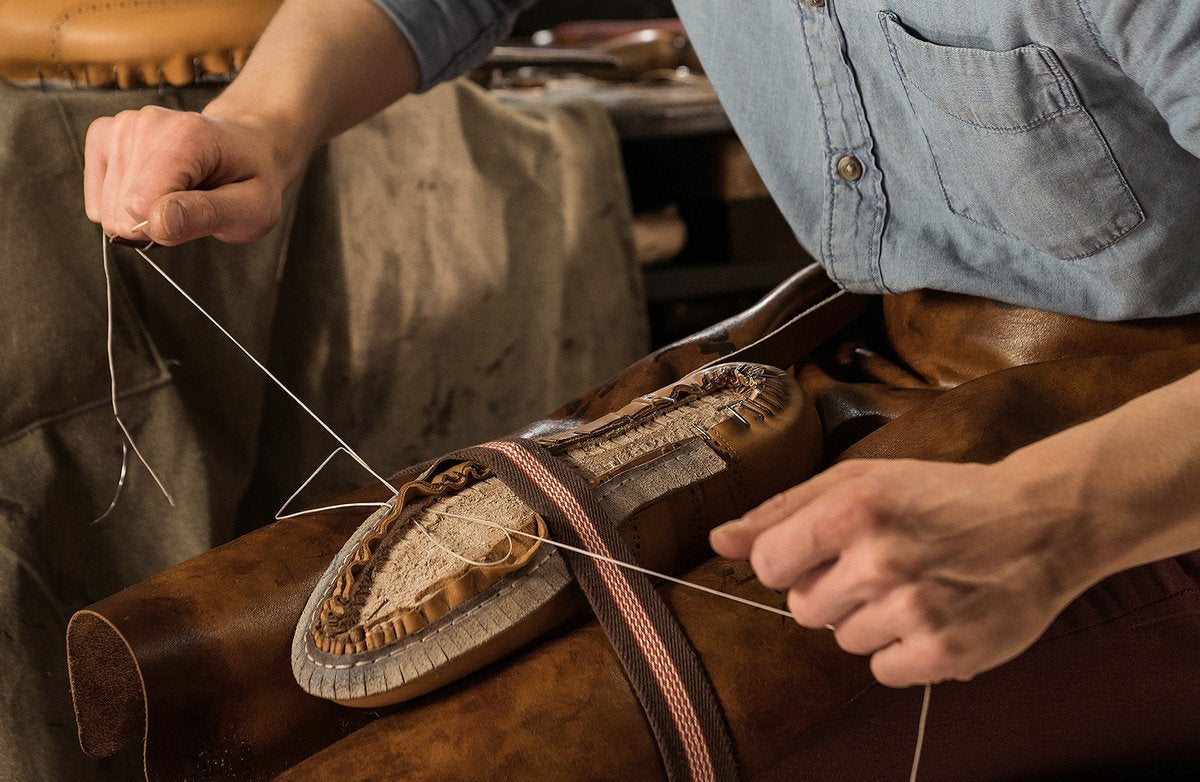
Blake Vs. Goodyear: which is the ultimate sole construction method?
Why does the stitching method used to craft your leather shoes or boots matter? In short, your choice of method can completely change the look of your leather shoes or extend their life by decades. Dress shoes, made the good old fashioned way are made to last, but every method has its strengths and its drawbacks. So which is right for you? We have compiled the ultimate guide to each method below.
CEMENTED
Before we talk the best of the best, we need to talk about the most common construction in the shoe industry: the cemented sole. The construction of choice for the economically-minded, this is by far the most common method used by the sneaker industry as well as lower end dress shoes. In fact over 80% of shoes made today are cemented. In this method, the upper of the shoe, made of cloth or leather, is directly glued to the sole. While much less expensive, there are definite drawbacks to cemented shoes. The biggest one is the difficulty of replacing the soles. Even with proper machinery, which few shoe repair shops have, more often than not a leather upper is damaged during the desoling process. Few cobblers want to tell their clients that their shoes have been totaled under their watch, so most cobblers don’t even offer resoling for cemented shoes. Other than this major drawback, cemented shoes are by far the quickest way of adding soles to a shoe, not to mention how economically efficient it is to produce.
BLAKE

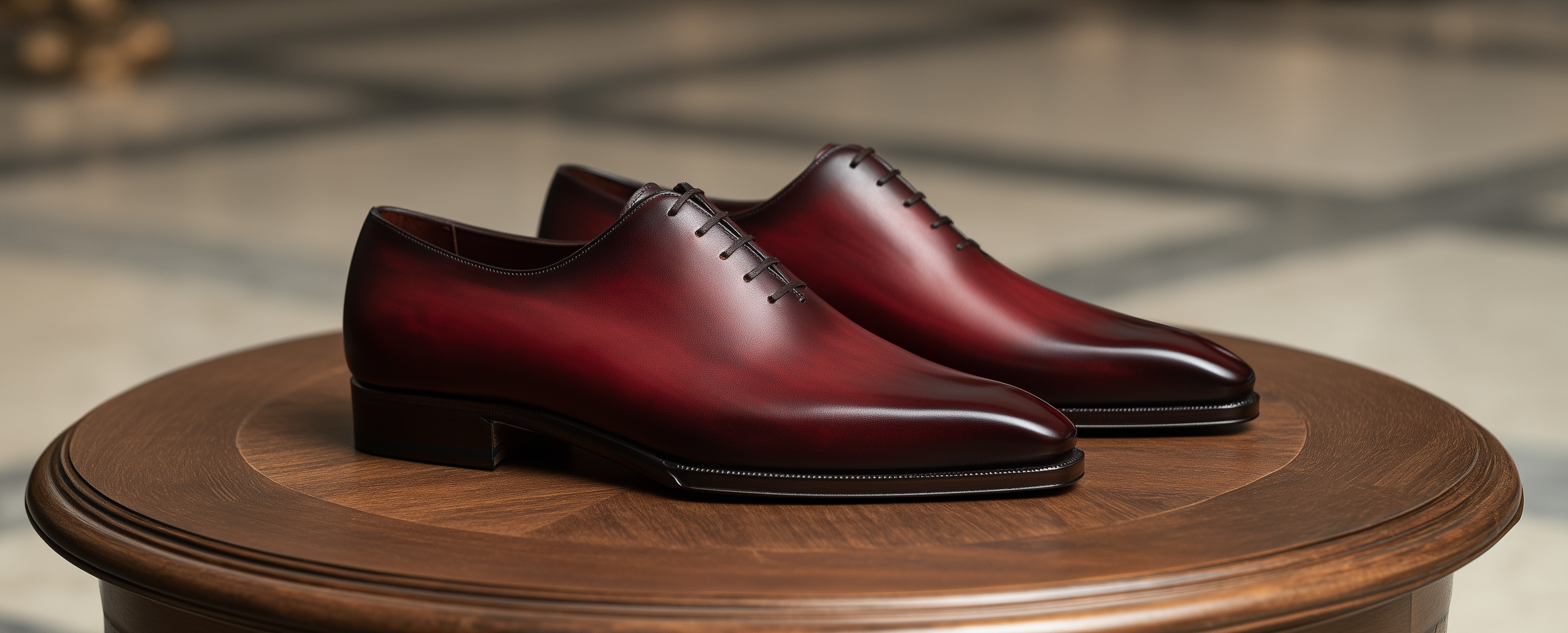
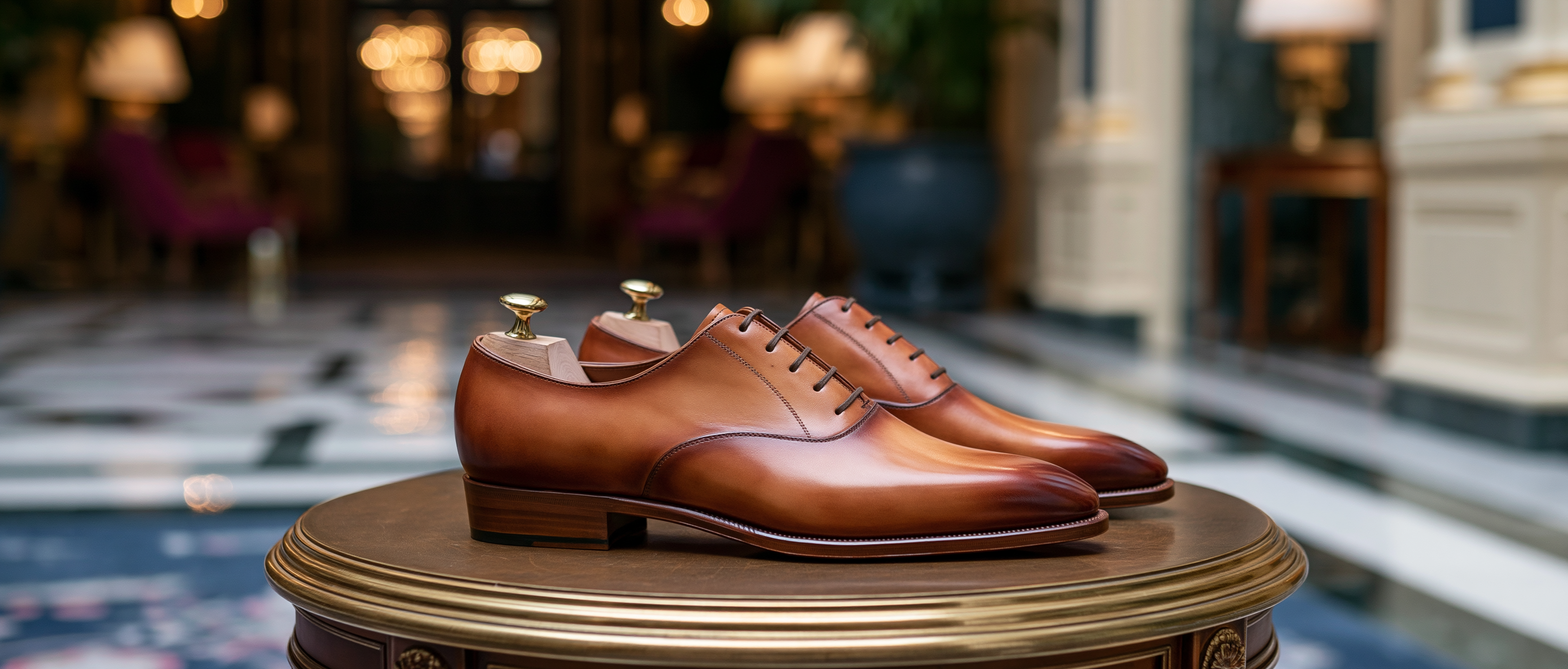
The sleekest of the construction methods, the Blake construction is embraced for its thin and close cut profile, making the shoe look aesthetically sleek and is a great match for a well-fitted Italian suit. Created by Lyman Reed Blake in 1856 to stitch all parts of the shoe together in one neat internal stitch. A true product of the industrial revolution, it is a story of ingenious technology and technique that has stood the test of time. It is lightweight compared to the Goodyear welt and by having fewer layers, it is much more flexible, minimizing break-in time. The cost of this method is lower than the Goodyear welt but more expensive than the cemented method. On the other hand, resoling the shoe is more expensive and difficult compared to a Goodyear welt. If the shoes need resoling, a cobbler has to have a Blake stitch machine, which not every cobbler does. Also, one of the biggest drawbacks of owning a pair of Blake stitched shoes is how careful one has to be about wearing them in rainy weather. They are not waterproof so water can easily ruin them if they are not properly dried. This is the main reason why they are mostly worn in very warm and dry weather areas. Another thing to be mindful about is that the interior stitching can bother people with sensitive feet.
BLAKE RAPID


The Blake-Rapid construction can be described as a continuation of the Blake construction. It adds an outsole, covering the Blake stitches underneath. To properly attach the outsole, Rapid stitching is introduced around the perimeter of the midsole and outsole, producing a welted look like that of the Goodyear. The first sole is sewn from the inside together with the upper and the insole, while the second sole is joined to the first with a seam outside, obtaining improved isolation from the elements, making it easy to resole, comparable to the Goodyear welt. This means that the thickness of the Blake Rapid sole mimics that of the Goodyear welt, generally a minimum of 8 mm or 0.31 inches, making it sturdier and weatherproof, while enjoying a low cost and efficient stitching process. Resoling is easy as detailing the outsole does not affect the structure of the Blake Stitch underneath.
GOODYEAR WELT


A heavier and sturdy construction, the Goodyear welt has been known historically for being the golden standard for quality shoemaking and it is synonymous with high quality footwear. The machinery for creating a Goodyear welt was invented in 1869 by Charles Goodyear Jr. His sewing machine could quickly stitch together the welt, the upper, and the soles. A Goodyear welt can also be made by hand, known to be more time consuming but also more durable than machine made. The space enclosed by the welt is filled with shredded cork to add cushioning and breathability to the interior of the shoe. The outsole is stitched to the welt. After the upper is placed between the soles, it is tucked in between is the rib and the leather welt, which are stitched all the way through the several layers. The last step is the visible stitch that can be seen from the top of the shoe, holding the sole in place. In the resoling process, this can be cut through, allowing the removal of the sole without causing damage to the upper. If you flip the shoe, you may see some soles that have exposed stitching and some that have the stitches covered depending on the client’s preference. If the client prefers a blind stitch, a channel is opened at the bottom of the sole to perform the stitching and then covered and painted over to hide the stitching.
The Goodyear construction method is most popular in England as its weatherproofness becomes a utilitarian necessity to match its year-round rainy weather. It is known to be the most complex and sturdy construction available for shoes. The thickness of the sole will have a minimum of 8 mm or 0.31 inches and it can go up from there depending how many layers of leather the client wants for his soles. Each outsole addition comes in 4mm increments. This method also requires the most skilled craftsmanship as it is time consuming and laborious. The two level stitching makes it incredibly easy to resole, making it the preferred construction by shoe repair shops. Because the welt performs as a buffer between the insole and the outsole, removing the old sole and attaching a new one can be done by machine or by hand without the need for any one specific machine. The extra cost that comes with this method is worthwhile as it allows repeated resoling, making it possible for a pair of shoes to last decades.
SO WHICH METHOD IS RIGHT FOR YOU?
While cemented shoes are the least expensive, the construction method makes for shoes that are not durable in the long run. Shoes that usually last until their soles are worn out.
The Blake method is the perfect method for a sleek look and is lower in price. Resoling can be more costly or difficult, though certainly not impossible. Given a warm and dry climate with proper care, this method will make a pair of leather dress shoes truly stand out.
The Blake Rapid method is in many ways just like the Goodyear: a heavier look that is sturdy and comfortable. It is much more easily resoled than the Blake method and able to better withstand a little rain. Though please look at our guide to drying wet shoes properly!
The Goodyear welt is considered the gold standard of quality construction, and for a reason. This construction method takes a real craftsman’s touch and can be labor intensive and is therefore expensive. But resoling is widely available and can be less expensive, making shoes that can be worn for decades.
Hopefully that gives you a good sense for what you might be looking for. If you have any more questions, find out more about how your Bondeno shoes are crafted Here.

Leave a comment
This site is protected by hCaptcha and the hCaptcha Privacy Policy and Terms of Service apply.