

Article: How Bespoke Dress Shoes Are Made: A Complete Step-by-Step Guide
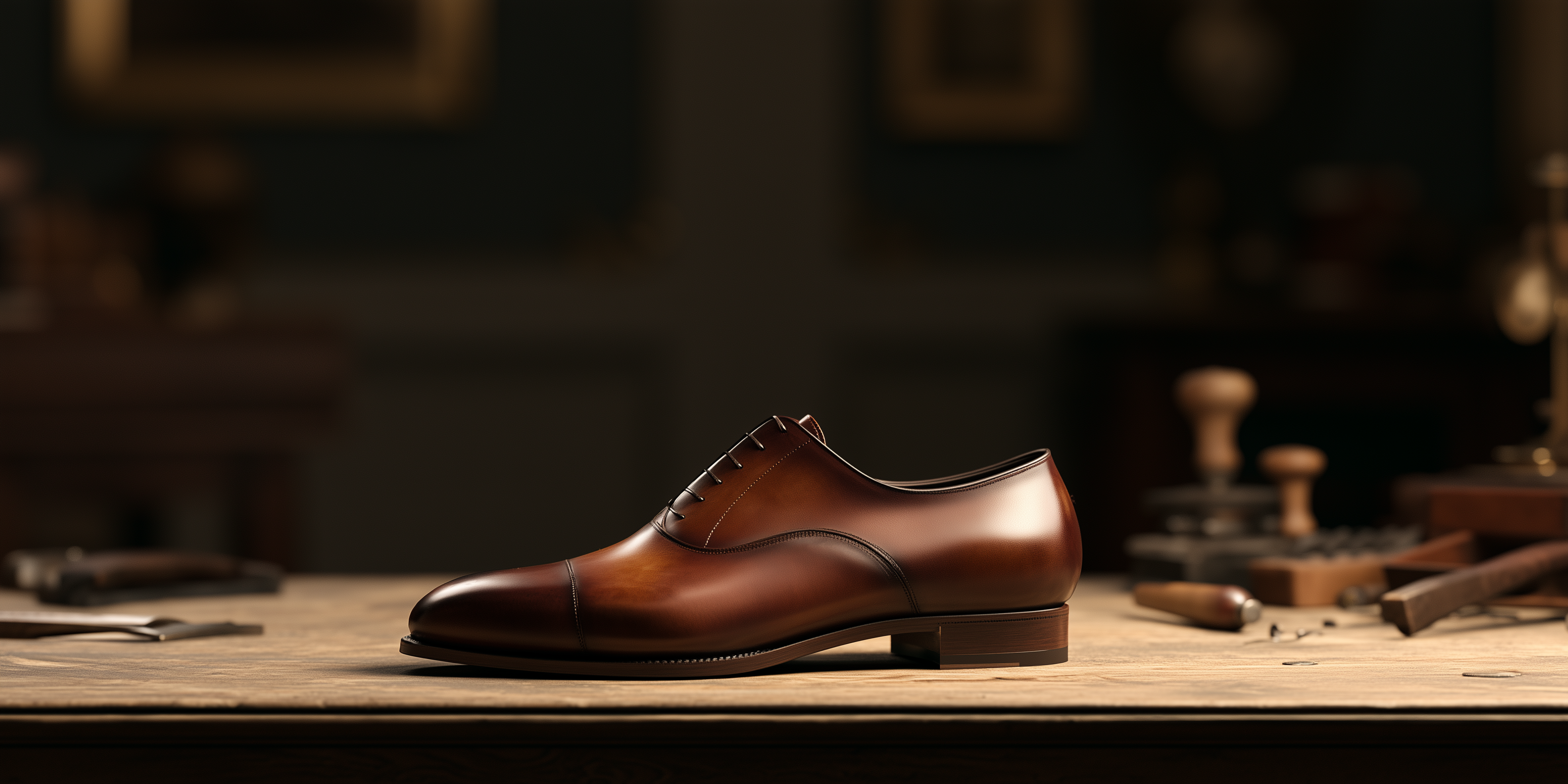
How Bespoke Dress Shoes Are Made: A Complete Step-by-Step Guide
True bespoke dress shoes represent one of the last remaining forms of pure craftsmanship in modern menswear. Unlike mass-produced footwear or even made-to-measure options, a genuine bespoke pair begins with nothing more than your feet and ends as a one-of-a-kind object built entirely around them. The process is slow, exacting, and deeply personal. It typically spans several months and involves dozens of hours of skilled handwork. Understanding every stage reveals why these shoes command their price and why, once experienced, they are difficult to replace with anything less.
1. Precise Measurements and Foot molds
A series of circumferential measurements must be taken at key points: the ball of the foot, the waist (the narrowest part just behind the ball), the instep, the heel, and the ankle. Length is measured both while standing and seated, along with recording the height of the arch and the position of the big toe joint.
In addition to tape measurements, a detailed outline of each foot is created. Standing on a sheet of paper or thin cardboard. Modern 3D foot molds can also be used for greater precision.
Finally, capturing photographs of the feet from multiple angles provides a helpful visual reference. The more data collected at this stage, the fewer corrections will be needed later.
2. Creating the Personal Last
The last is the three-dimensional wooden (or occasionally plastic) form around which the shoe is built. It is the single most important element of the entire process. A skilled last maker carves or machines a block of seasoned beech or hornbeam into an exact sculptural representation of your foot, adjusted for the style of shoe you have chosen and the amount of “room” required for comfort and movement.
The last is never a simple copy of the foot. It incorporates allowances for the way the foot expands during walking, the thickness of the leather, and the desired aesthetic of the finished shoe. A formal Oxford last will typically feature a more refined, elongated toe shape than a casual loafer last. Heel height, toe spring (the upward curve at the front), and the “pitch” of the last are all carefully calculated.
Creating the first pair of lasts can take many hours. Once finished, the lasts are labeled with the client’s name and stored indefinitely. Future pairs can be ordered from the same lasts, often with only minor adjustments, which is why long-term clients of a bespoke maker enjoy progressively faster and more refined results.
3. Pattern Making
With the last complete, the pattern maker creates the flat templates that will become the upper of the shoe. Working from the three-dimensional last, the craftsman develops paper or cardboard patterns for every piece of the upper: vamp, quarters, tongue, facing, and any decorative elements such as brogueing or medallions.
This stage demands both technical precision and aesthetic judgment. The pattern must account for the stretch of the leather, the way seams will sit on the finished shoe, and the overall balance of the design. A well-cut pattern ensures that the finished upper will pull tightly and evenly over the last without wrinkles or excessive tension.
4. Clicking (Cutting the Leather)
“Clicking” is the traditional term for cutting the leather pieces. The cutter, or clicker, selects hides of the appropriate quality, thickness, and grain. For dress shoes this is almost always full-grain calfskin of the highest grade, though cordovan, suede, or exotic skins may be used for special orders.
The patterns are laid out on the hide with great care to avoid scars, veins, or inconsistencies in the leather. Each piece is cut by hand with a sharp knife. Because leather is a natural material, no two hides are identical, so the clicker must exercise constant judgment. The direction of the grain and the stretch of the skin are considered so that the finished shoe will hold its shape and age gracefully.
5. Closing the Upper
The individual leather pieces are now stitched together to form the complete upper. This stage, called closing, is usually performed by a specialist. Seams are carefully skived (thinned) so they lie flat. Linings are attached. Eyelets are punched and reinforced. Any decorative stitching or brogueing is completed.
High-end makers still perform much of this work by hand or with specialized machines that allow fine control. The quality of the closing largely determines how clean and refined the finished upper will look. Poorly closed uppers can show puckering, uneven seams, or weak points that fail over time.
6. Lasting
Lasting is the dramatic moment when the flat upper is transformed into a three-dimensional shoe. The upper is dampened slightly to make the leather more pliable, then pulled tightly over the last and secured temporarily with tacks or lasting pliers. The craftsman works methodically around the last, ensuring the leather conforms perfectly without wrinkles or excess tension in critical areas such as the toe and heel.
This stage requires significant strength and sensitivity. The lasting must be tight enough that the shoe will retain its shape for decades, yet not so tight that it creates pressure points or distorts the design. Once the upper is correctly lasted, it is left on the last for a period of time—sometimes days—so the leather can set permanently to the form.
7. Welting
For traditional Goodyear-welted or hand-welted construction, a narrow strip of leather called the welt is now stitched to the upper and insole around the edge of the shoe. This creates a strong, flexible joint that will later allow the outsole to be attached and, more importantly, makes the shoe resolable for many years.
Hand-welting is slower and more expensive than machine Goodyear welting, but many connoisseurs prefer it for the slightly more refined appearance and greater flexibility it can offer. The choice of construction method is usually discussed during the initial consultation.

8. Bottoming: Sole, Heel, and Shank
With the welt in place, the bottom of the shoe is built. A leather or cork filler is added for comfort and insulation. A steel or wooden shank is inserted under the arch for support. The outsole—almost always high-quality leather for formal dress shoes—is then stitched or cemented to the welt.
The heel is built up in layers of leather, shaped, and secured. Heel height is determined by the last and the client’s preference. Some makers offer a choice of stacked leather heels or combination heels with a thin rubber top lift for quieter walking and better wear.
After the sole and heel are attached, the edges are trimmed, rasped, and carefully finished. This edge finishing is one of the subtle details that distinguish truly fine work from ordinary shoes.
9. Finishing and Polishing
The final stage is where the shoe receives its character and polish. The edges of the sole and heel are inked, burnished, and polished to a deep, durable finish. The upper is cleaned, conditioned, and polished. Many makers apply multiple layers of cream and wax, building a soft sheen rather than a high-gloss “spit shine” unless specifically requested.
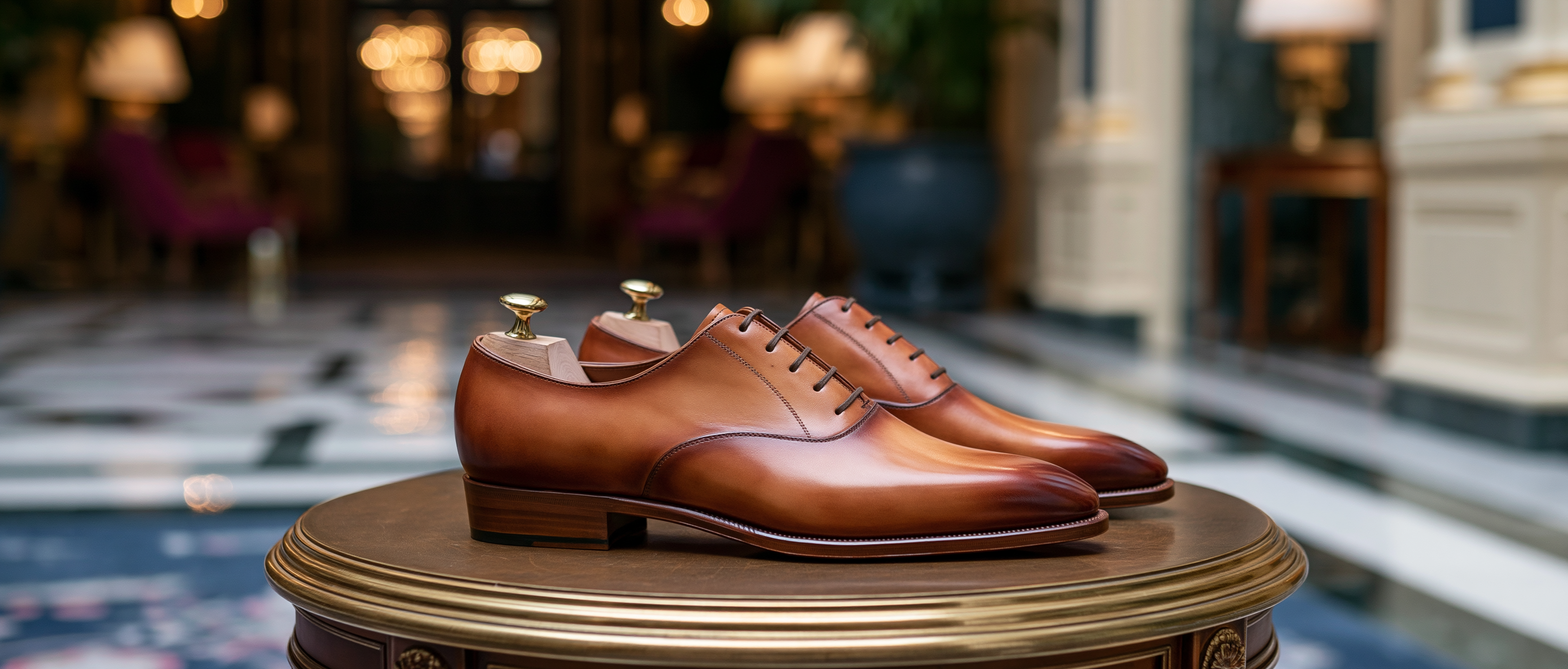
Any final details—such as the addition of a fiddleback waist (the elegant curved finishing on the underside of the sole), decorative sole stitching, or a discreet maker’s mark—are completed. The shoes are then carefully inspected, paired, and prepared for delivery, often accompanied by shoe trees made to the same lasts and a care kit.
Why the Process Takes Months
A single pair of fully hand-welted bespoke shoes can require 150 to 300 hours of skilled labor spread across multiple craftsmen. The lasts alone may take a week or more. Leather must be conditioned and rested between stages. The result is a lead time that commonly ranges from four to twelve months.
Subsequent pairs from the same lasts are significantly faster, often three to six months, because the most time-consuming creative work has already been completed.
The Result: Shoes That Belong Only to You
When the finished shoes finally arrive, the difference is immediately apparent. They fit with a precision that mass-produced footwear cannot match. There is no break-in period in the conventional sense; the shoes feel right from the first wearing because they were built around the exact contours of your feet. Over years of wear they will mold even more closely, developing a rich patina unique to the way you walk and the conditions in which you wear them.
This is the quiet luxury of true bespoke footwear. It is not about logos or trend cycles. It is about an object made specifically for one person through a process that has changed remarkably little in more than a century. Every stage from the first measurement to the final polish exists to serve the singular goal of creating shoes that fit better, last longer, and feel more personal than anything available off the shelf.
For those who value that level of care and individuality, the lengthy process is not a drawback. It is the entire point.

Leave a comment
This site is protected by hCaptcha and the hCaptcha Privacy Policy and Terms of Service apply.