
The Ultimate Guide to Men’s Dress Shoe Styles 2026
Men’s dress shoes still carry a wardrobe. In 2026 the best pairs balance classic shapes with all-day comfort—and, when the feet never match a retail last, a personal last carved from an at-home fitting. This guide covers the styles every man should know, how classic and modern options differ, when to wear each, and how Bondeno builds them in Florence.
Classic vs modern: a useful split
Classic dress shoes lean on simple, lasting design: polished calfskin, restrained toes, and—most often—closed or open lacing in Oxford and Derby families, plus monk straps. They read formal, photograph cleanly, and age well.
Modern dress shoes keep the same vocabulary but push materials and attitude: suede and pebble grain, softer loafers, Chelsea boots with contemporary lasts, and dress sneakers or hybrid soles for commute-to-office days.
Neither side “wins.” Choose by occasion, then by how you like to look, then by fit. A black captoe Oxford still owns black-tie and interviews; a suede loafer or Chelsea may own Thursday dinner and Friday travel.
Anatomy in one minute
Most leather dress shoes share four parts: toe, vamp, facing (where laces or straps sit), and quarter. How those pieces meet is what separates an Oxford from a Derby, a loafer from a monk strap.
Key elements of a quality dress shoe
- Materials: Full-grain calfskin remains the workhorse; suede softens a look; exotic skins raise price and maintenance.
- Soles: Leather for elegance and breathability; rubber (e.g. Vibram) for wet streets. At Bondeno both Pietro Presot leather and Vibram rubber are options on eligible styles.
- Construction (Bondeno): Dress shoes and boots use Blake, Blake-Rapid, or Goodyear welt (Goodyear +$495). Ballet flats, sneakers, and pumps use cemented construction. We do not offer hand-welting.
- Fit: Measure both feet; left and right often differ. Bondeno captures shape at home with a Bio-Foam® mold kit—no workshop visit—and backs pairs with our Fit Guarantee.
Lead time is about five months. Lasts and shoes are made in Florence, Italy, by a sixth-generation shoemaking family (since 1908). Bondeno was founded in New York in 2015. Shoes from $1,990, boots from $2,490.
Oxford shoes
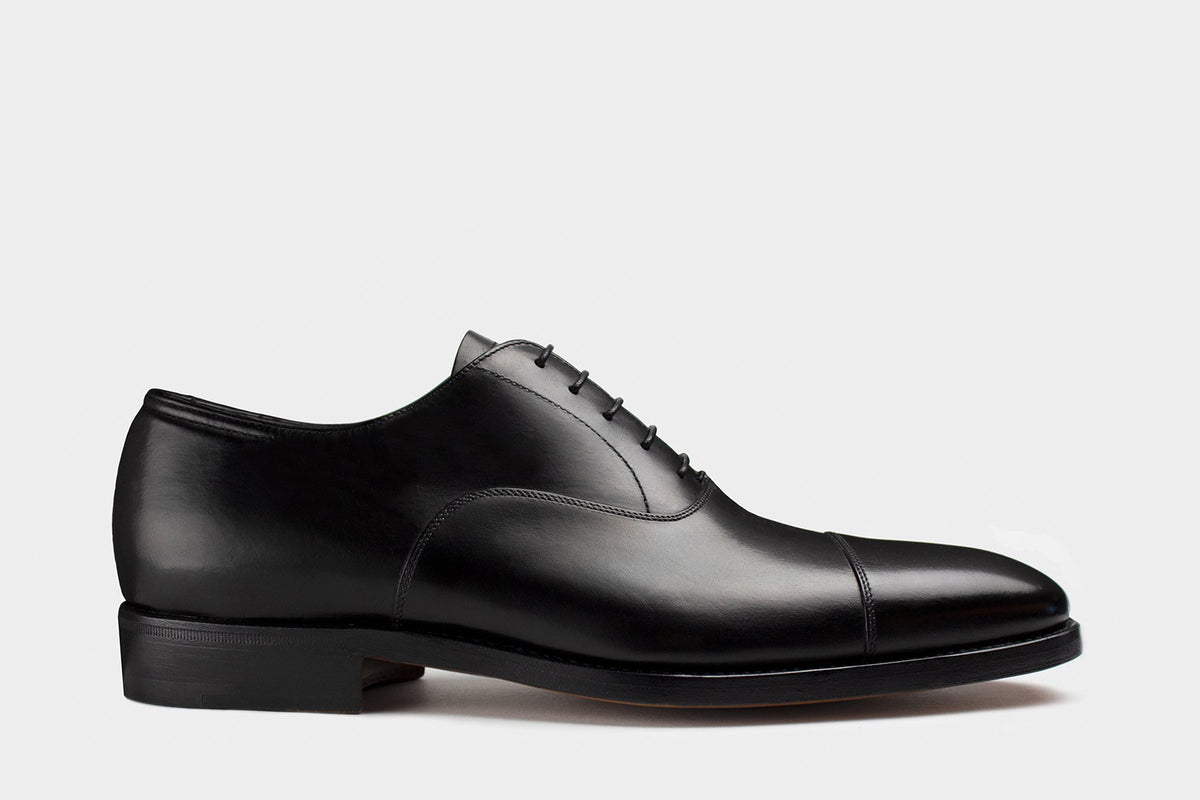
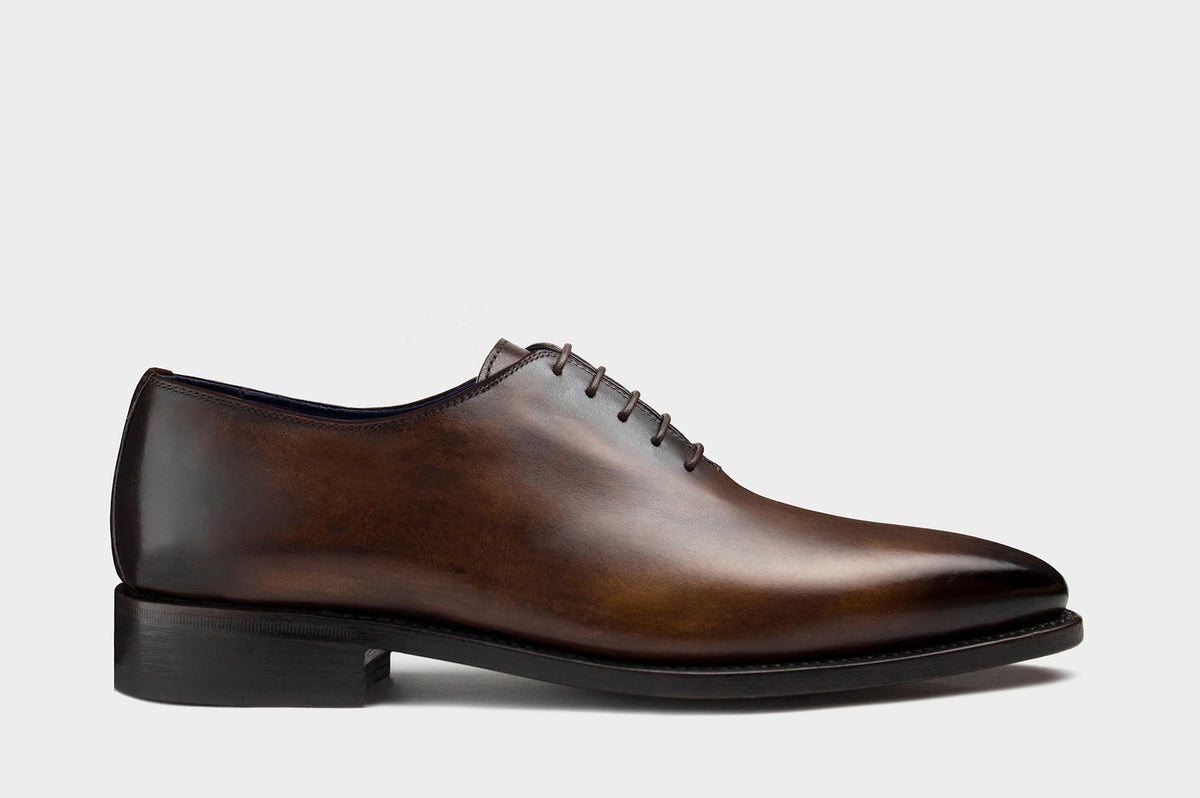
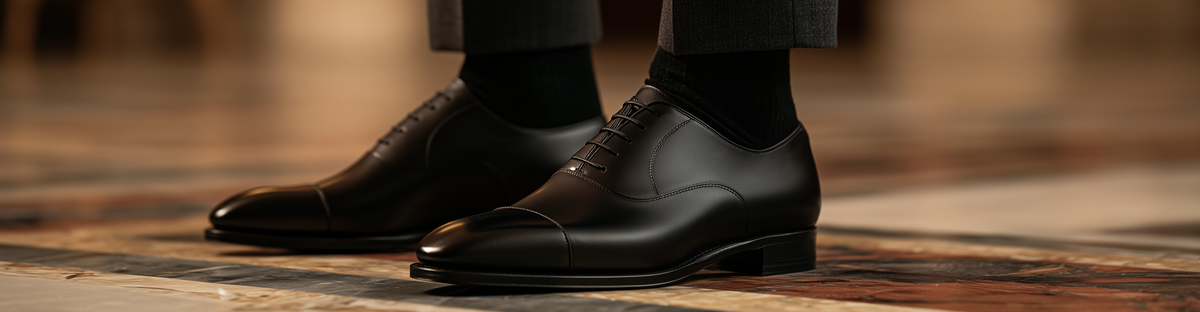
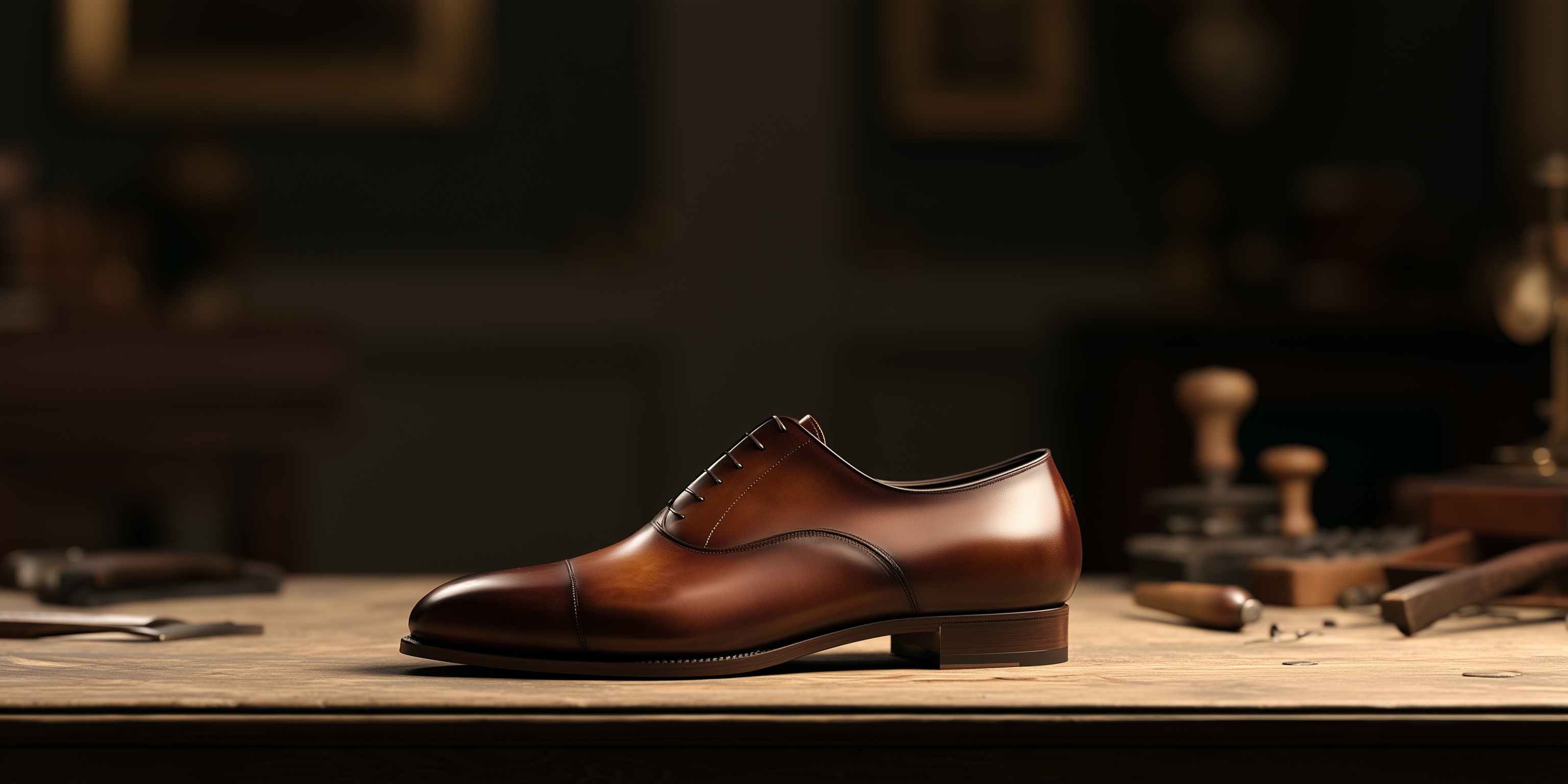
What they are: Closed lacing—the facings are stitched under the vamp—for a sleek, formal line. Captoe and wholecut are common variants; the wholecut is cut from a single piece of leather with minimal seaming.
History note: The shape became associated with nineteenth-century Oxford University students (sometimes called the Oxonian), evolving from an earlier half-boot cut into today’s low shoe.
Pros: Sharp with suits; the default for formal events.
Cons: Less adjustable than a Derby on very wide feet (bespoke lasts fix that).
When to wear: Weddings, interviews, black-tie (patent or highly polished black), formal offices.
Styling tip: Black Oxford + charcoal or navy suit is the timeless combination; brown or burgundy Oxfords with navy or grey for daytime.
Browse Bondeno Oxfords.
Derby shoes (Gibson / Blucher)
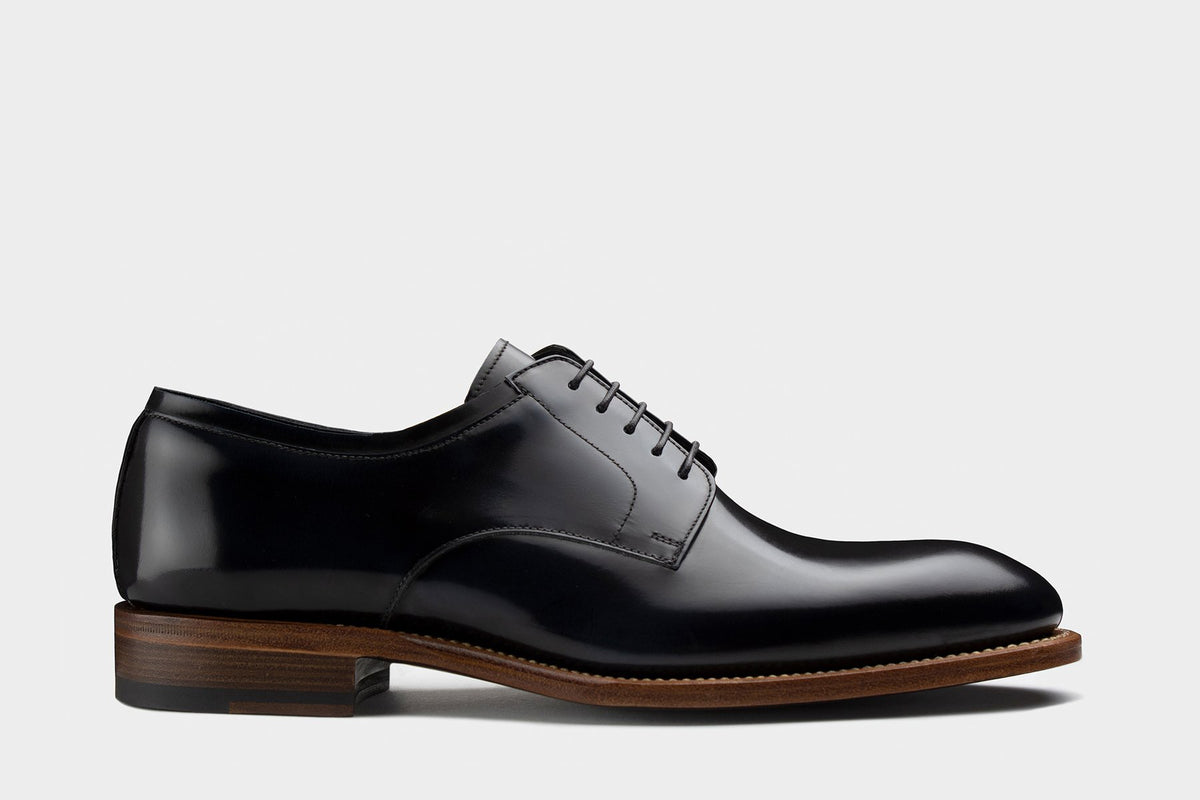
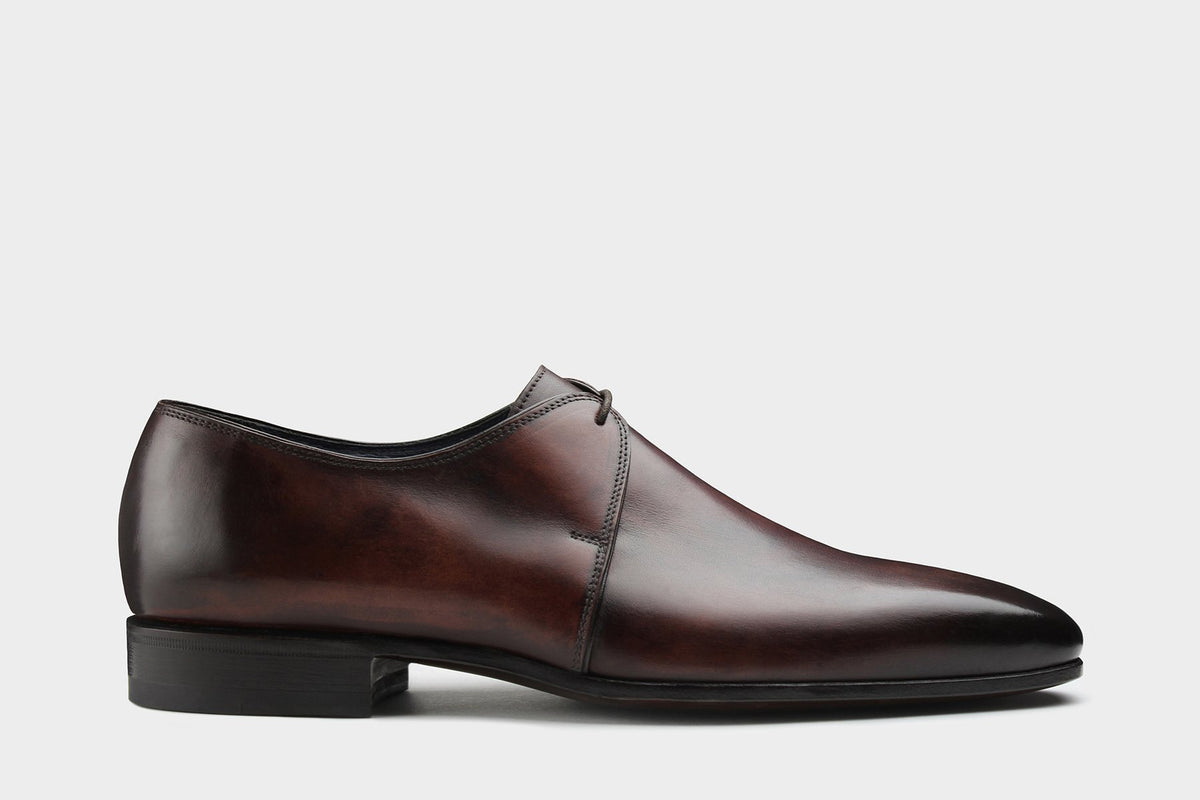
What they are: Open lacing—the facings sit on top of the vamp—so the shoe opens wider. Also called Gibson or Blucher.
History note: Nineteenth-century sporting and town wear that settled into the smarter-casual dress shoe.
Pros: Easier entry and a more forgiving feel; strong for business-casual.
Cons: Reads slightly less formal than a closed-lace Oxford.
When to wear: Office, weekends, travel, smarter dinners.
Styling tip: Pair with tailored trousers, chinos, or dark denim; chunkier soles push the look modern.
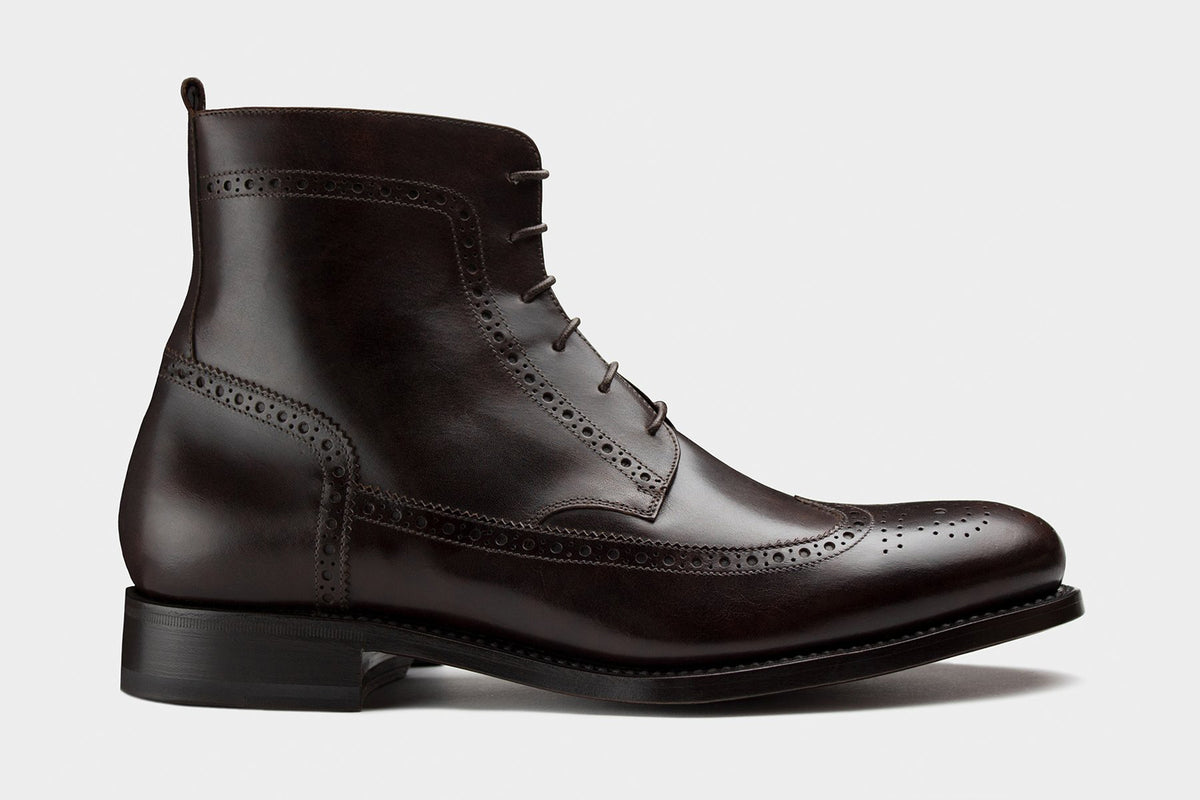
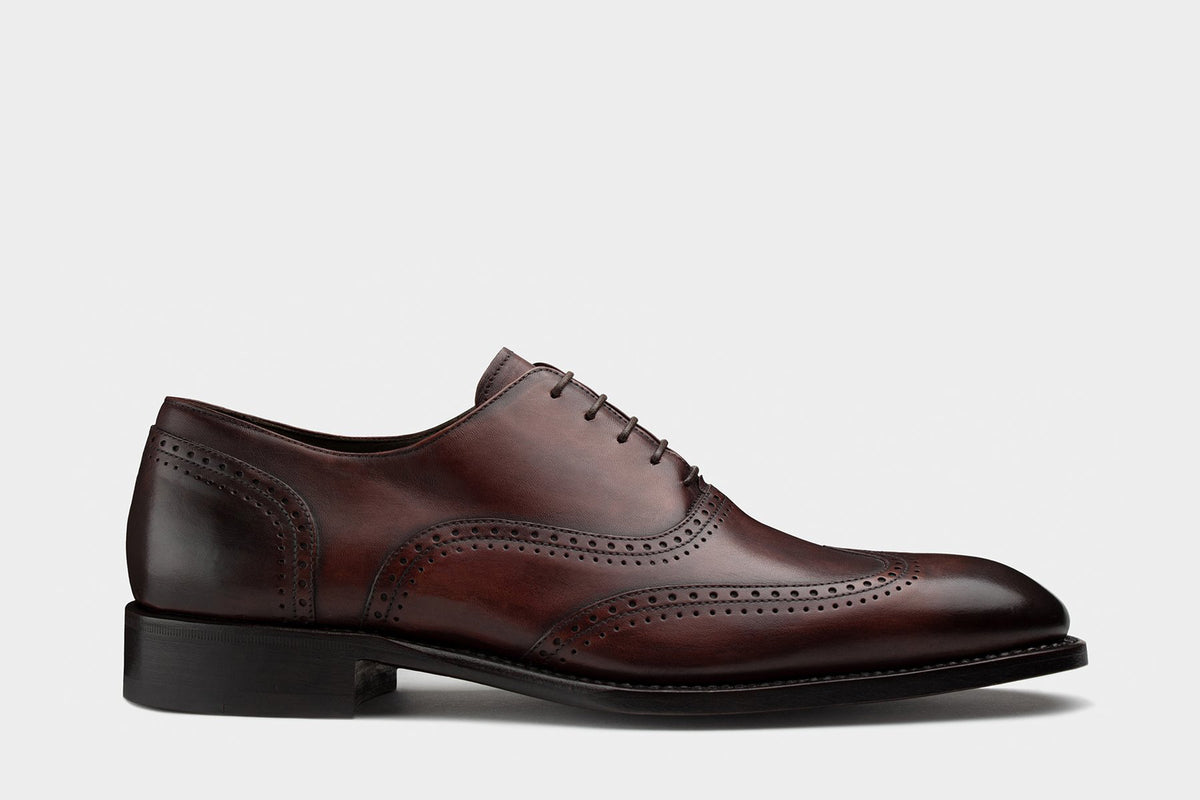
Brogues and wingtips
What they are: Decorative perforations (broguing) on Oxford or Derby patterns. Longwing and shortwing layouts create the wingtip silhouette.
History note: Perforations began as a practical way to drain water from country shoes and became ornament.
Pros: Texture and visual interest; works formal-to-smart-casual depending on color and polish.
Cons: Heavy broguing can feel too busy with very formal black-tie.
When to wear: Day weddings, business, smart weekends.
Styling tip: Dark brown wingtip Derby with a tweed or unstructured blazer is a classic autumn look.
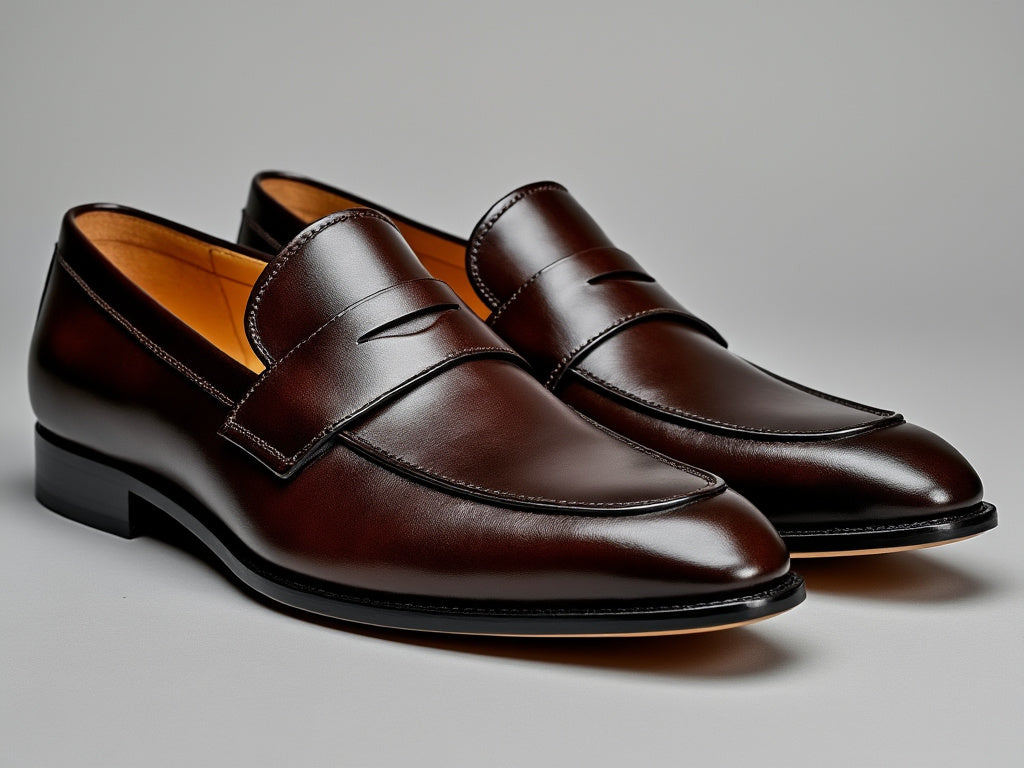
Loafers
What they are: Slip-ons with no laces—penny, tassel, and bit variants are the main families. Driving shoes are a softer, more casual cousin.
History note: English house-shoe roots; American prep culture popularized the penny loafer; bit and tassel versions followed.
Pros: Fast on/off; spring/summer friendly; modern wardrobes live in them.
Cons: Less formal than a laced Oxford for strict dress codes.
When to wear: Smart-casual offices, dinners, travel.
Styling tip: Slightly shorter trousers show the loafer cleanly; suede for day, polished calf for evening.
Monk strap shoes
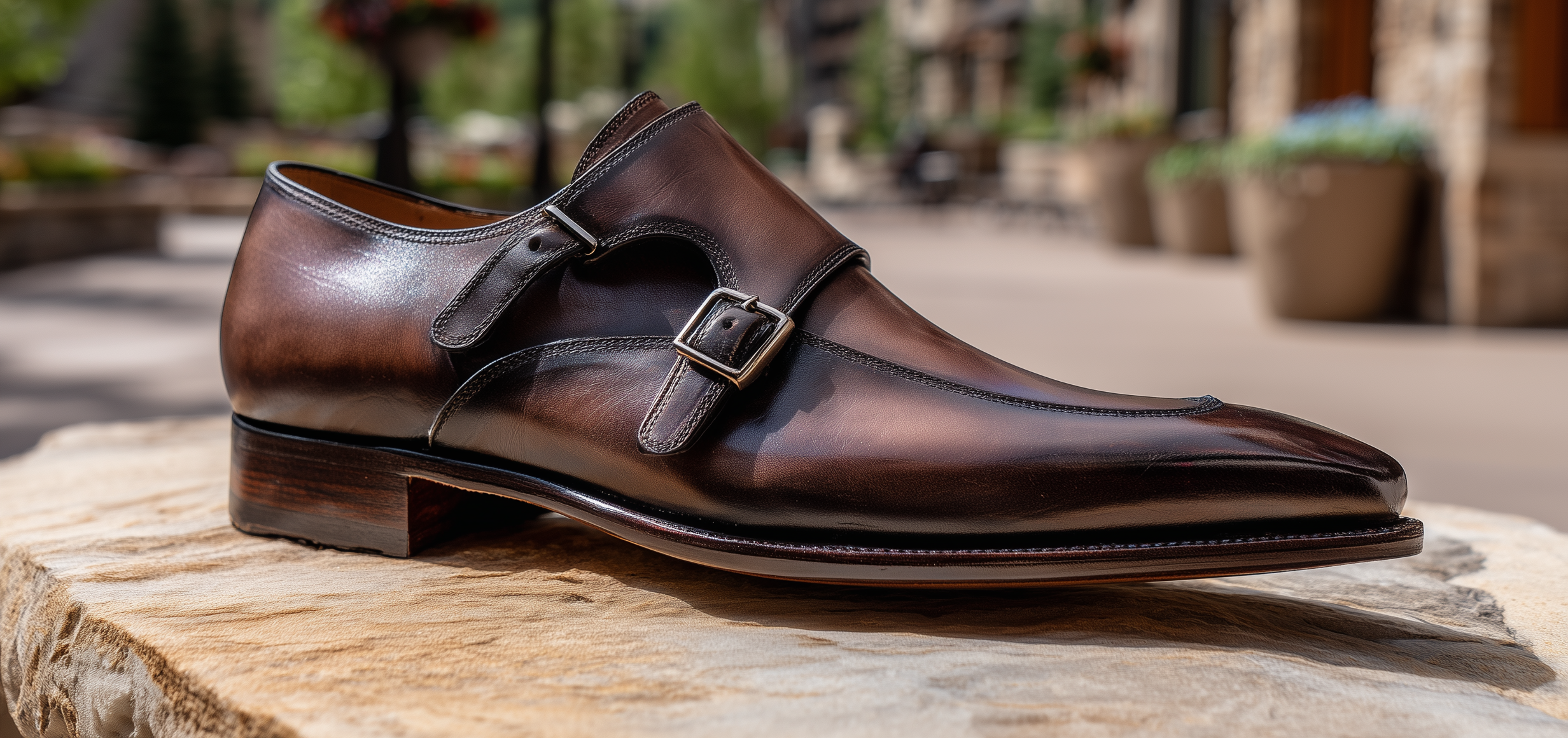
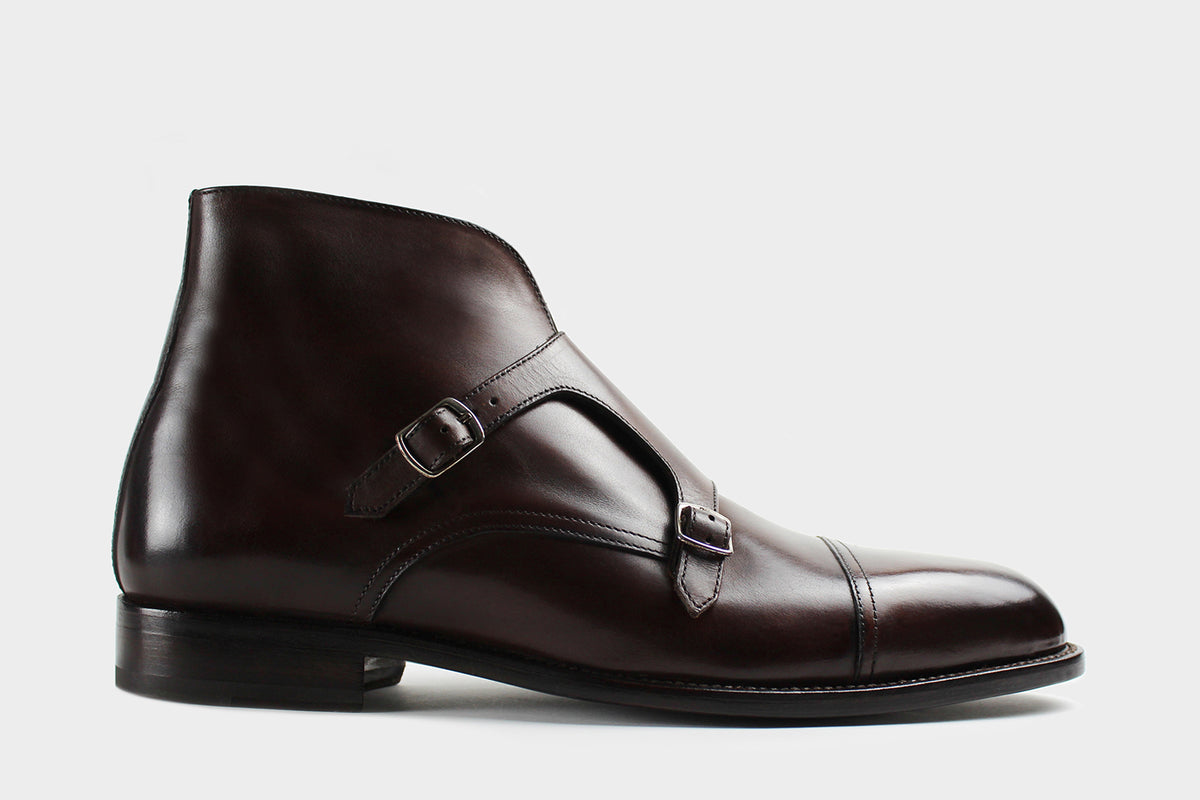
What they are: Buckle strap(s) instead of laces—single or double monk.
History note: Named for buckled shoes worn by monks as sturdier footwear than sandals.
Pros: Distinctive focal point; sits between Oxford formality and Derby ease.
Cons: Buckles need confidence; can clash with already-busy outfits.
When to wear: Creative offices, dinners, events where you want the shoe noticed.
Styling tip: Double monks in dark brown calf with a navy suit for a modern formal look.
Chelsea boots
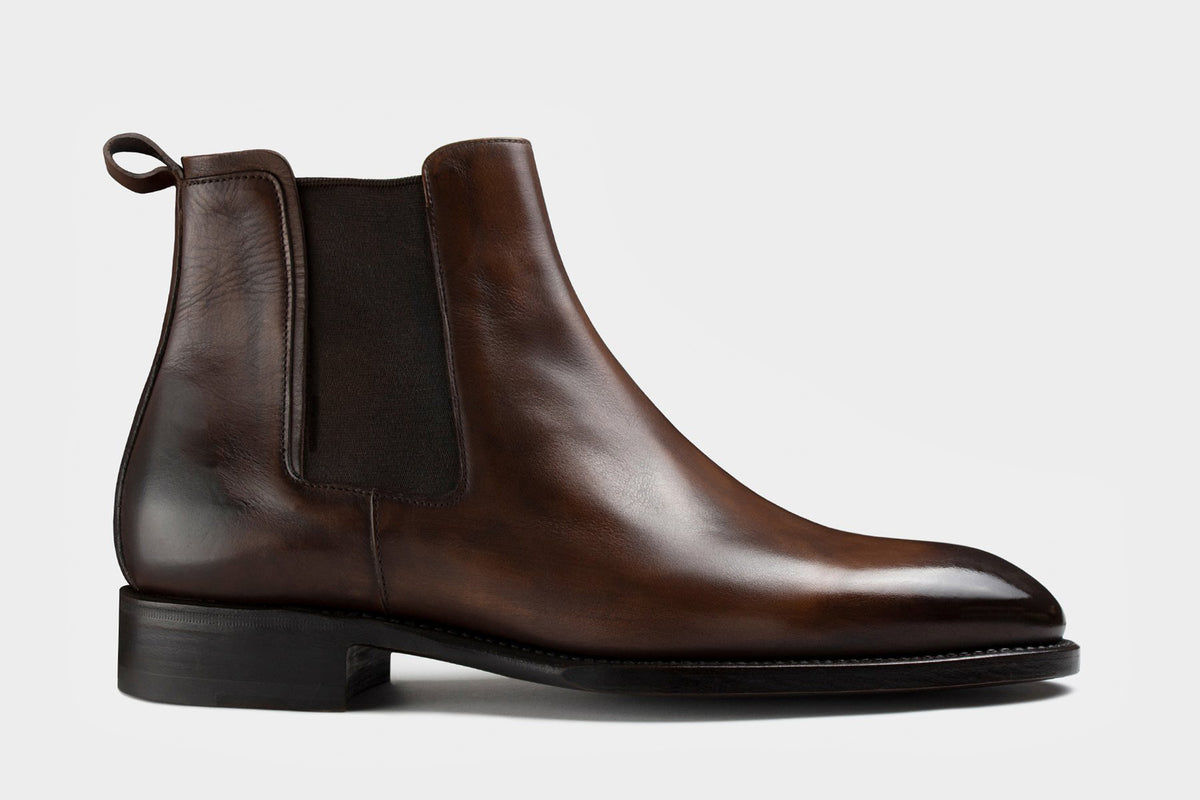
What they are: Ankle boots with elastic side gussets and a pull tab; sleek profile under trousers.
History note: Victorian London origins; later adopted by riders, mods, and contemporary street style.
Pros: Easy slip-on; year-round with the right leather/suede; bridges formal and casual.
Cons: Harder to adjust fit without a proper last (another reason bespoke helps).
When to wear: Office to weekend; transitional weather.
Styling tip: Polished black Chelsea with tailored wool trousers; suede Chelsea with denim.
Chukka boots
What they are: Ankle-high lace-ups, usually two or three eyelets, round toe, open lacing. Desert boots are a casual rubber-sole cousin.
History note: Linked to polo (chukkas are periods of play) and post-match comfort boots.
Pros: Clean, understated; excellent smart-casual boot.
Cons: Not black-tie formal.
When to wear: Weekends, travel, creative offices.
Styling tip: Tan or snuff suede chukka with chinos or soft flannel.
Wholecuts
What they are: A minimal Oxford cut from one leather piece—maximum clean surface for polish and patina.
Pros: Elegant and modern-minimal; shows leather quality.
Cons: Less decorative interest if you prefer broguing.
When to wear: Formal offices, evenings, anytime you want quiet luxury.
Styling tip: Deep burgundy or black wholecut with a simple suit lets the leather speak.
Dress sneakers and hybrids (modern lane)
Sneaker-inspired soles under dress uppers—or fully bespoke sneakers—serve commute and travel days. At Bondeno, sneakers use cemented construction. Keep proportions clean so the pair still reads intentional with trousers, not gym kit.
How to choose the right style
- Occasion: Black-tie / interview → black Oxford. Business-casual → Derby, loafer, or Chelsea. Weekend → chukka, suede loafer, or casual Chelsea.
- Personal style: Classic wardrobe → calf Oxfords and Derbies. Modern wardrobe → loafers, monks, suede, hybrids.
- Feet: Wide feet or left≠right → open-lace Derbies help in RTW; in bespoke, the last is shaped to you either way.
- Budget: Bondeno bespoke shoes from $1,990, boots from $2,490, Goodyear optional at +$495. See 2026 pricing.
Care that protects the investment
Use shoe trees, brush dirt before it grinds in, polish calf regularly, protect suede, rotate pairs, and resole when the tread or leather sole is worn—not after the upper is ruined. Construction that can be resoled (Blake / Blake-Rapid / Goodyear) is part of why a good pair lasts.
Conclusion
Mastering men’s dress shoe styles means knowing Oxford, Derby, brogue, loafer, monk, Chelsea, chukka, and wholecut—then choosing classic or modern finishes for your life. If retail lasts never fit, Bondeno builds the same styles on a personal last from an at-home Bio-Foam® fitting, made in Florence on a five-month timeline, with a Fit Guarantee.
Explore men’s bespoke dress shoes and boots or start a consultation. For the investment math, see Are bespoke shoes worth it?.


Leave a comment
This site is protected by hCaptcha and the hCaptcha Privacy Policy and Terms of Service apply.